Blind Lifts: Banksman or Signal Person — Have You Agreed How to Stop?
A practical comparison of offshore banksman procedures and US OSHA construction requirements for blind lifts, signal person qualifications, radio communication and safe stopping when contact is lost.

BLIND LIFTS: BANKSMAN OR SIGNAL PERSON — HAVE YOU AGREED HOW TO STOP?
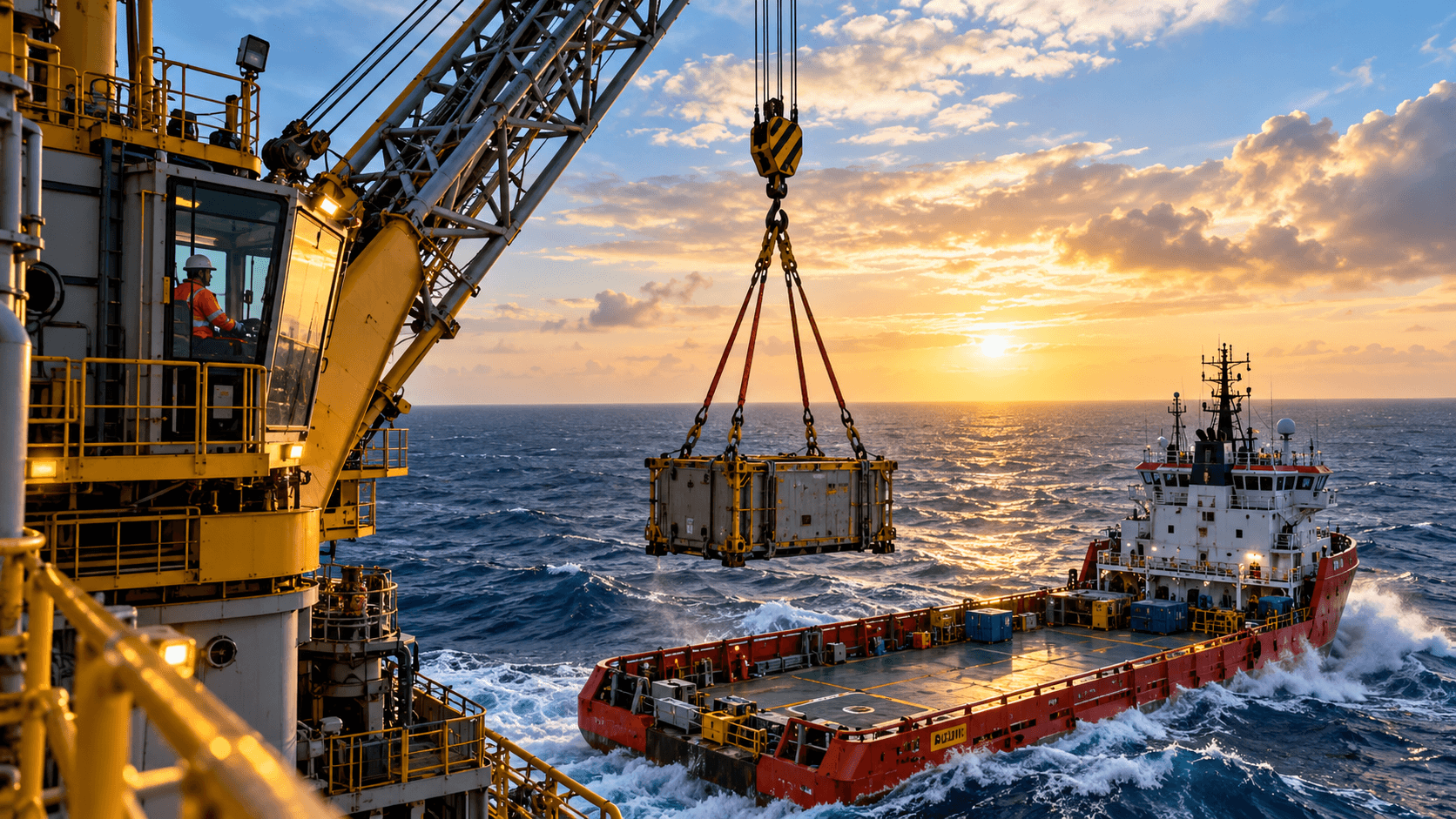
The load disappears behind a structure. The operator receives a radio instruction. Then the transmission breaks up.
Before the next movement, one question matters: does the operator still have reliable communication with the person directing the lift?
OffshoreTrainer’s handbook covers the banksman’s role, radio discipline and hand signals. Comparing these topics with US requirements highlights several practical points.
Agree who gives movement instructions.
Our offshore training material uses “banksman” or “signaller”. US OSHA construction regulations use “signal person”.
These titles should never be treated as proof of identical qualifications or responsibilities. Confirm the person’s competence, authority and role for the actual operation.
Loss of communication requires a safe stop.
Under OSHA 29 CFR 1926.1419, operations requiring signals must stop safely if signal transmission is interrupted. Work can resume once communication is restored and a proper signal is received and understood.
The practical lesson for a blind lift: never continue on an assumed instruction.
A working radio needs a working procedure.
OSHA 1926.1420 requires signal equipment to be tested on site before operations, a dedicated channel subject to specified exceptions, and hands-free reception for the operator.
Before lifting, agree call signs, crane identification, commands and the response to lost communication.
Qualification must be demonstrated.
OSHA 1926.1428 requires assessment through an oral or written test AND a practical test. Qualification documentation must identify the signalling methods covered.
Knowing the gestures is only part of the job. Understanding crane movement, stopping loads and equipment limitations also matters.
Anyone can raise the alarm.
OSHA distinguishes normal movement instructions from safety intervention: anyone recognising a safety problem must alert the operator or signal person using a stop or emergency-stop signal.
For international crews, the pre-lift briefing is where different training backgrounds must become one clearly understood operating procedure.
Scope matters: these OSHA provisions concern construction. US offshore fixed-platform cranes within BSEE’s remit have separate requirements, including API RP 2D through 30 CFR 250.108.
OffshoreTrainer brings these operational questions into training: who is directing the lift, which communication method is agreed, and when must movement stop?
What communication issue do you most often have to resolve during a pre-lift briefing?
#OffshoreTrainer #CraneSafety #LiftingOperations #Banksman #SignalPerson #OffshoreSafety #OSHA