Offshore Crane Safety: From Training to Operational Decisions
Why offshore crane safety depends not only on training, but on operational awareness, Stop Work Authority and the ability to make the right decision when conditions change.
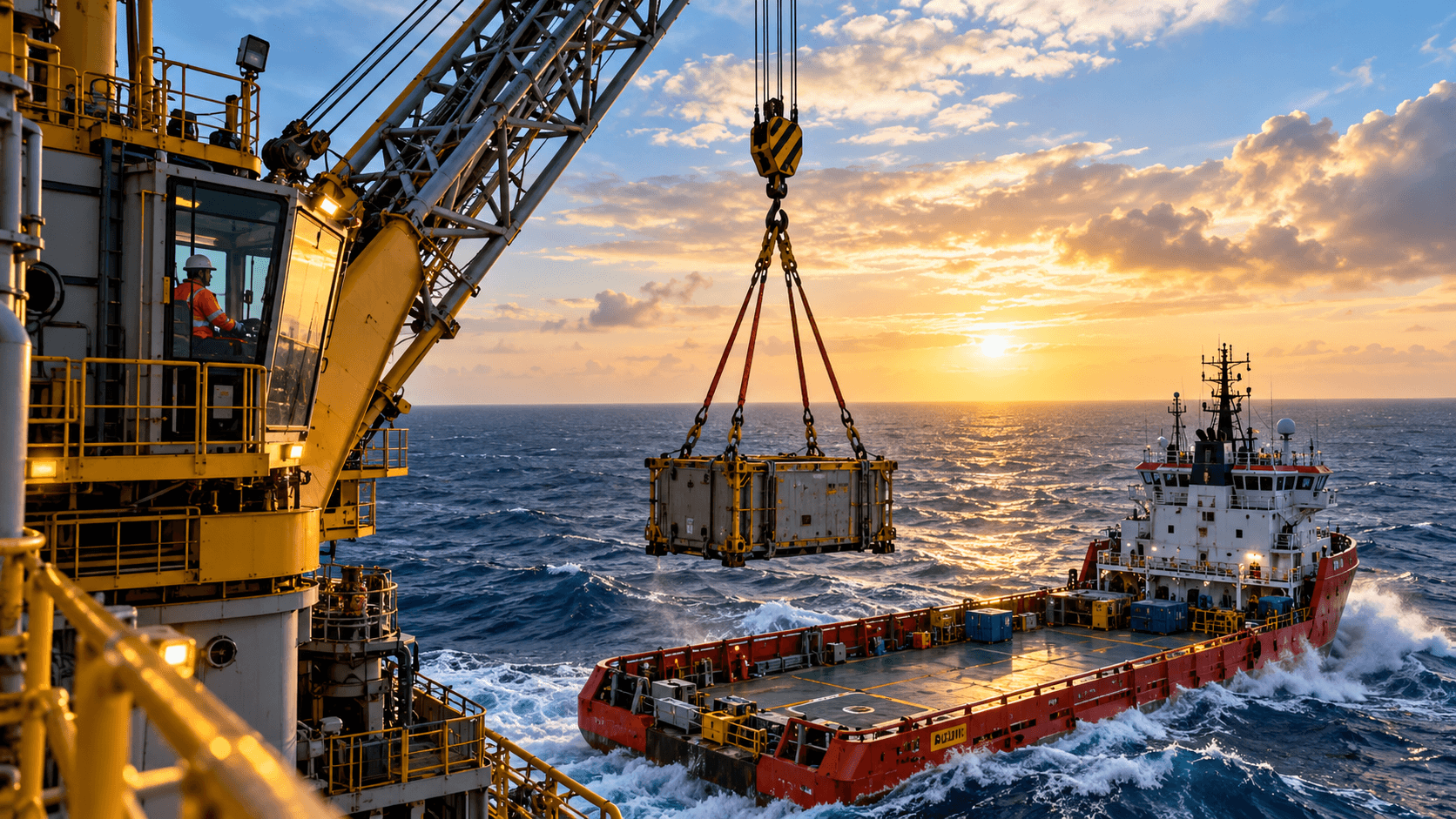
Offshore crane operations are rarely performed in perfect conditions.
Weather changes. Schedules move. Clients have expectations. Vessels have operational commitments. And sometimes, even when everything is prepared, the safest decision is not to proceed.
Recently, I had exactly that kind of situation.
I will not name the vessel, company, client, location, or anyone involved. The details are not important. The professional lesson is.
A crane operation was planned offshore, but the environmental conditions were developing in a way that raised serious concerns.
As the crane operator, I was not comfortable proceeding.
In situations like this, one of the most important responsibilities of a crane operator becomes very simple:
Know when not to lift.
During the toolbox discussion, I wanted a clear and structured second reference for the environmental conditions and the expected weather development.
So I used OffshoreTrainer.
OffshoreTrainer is an iOS application I originally developed as a professional training and operational support tool for offshore crane personnel.
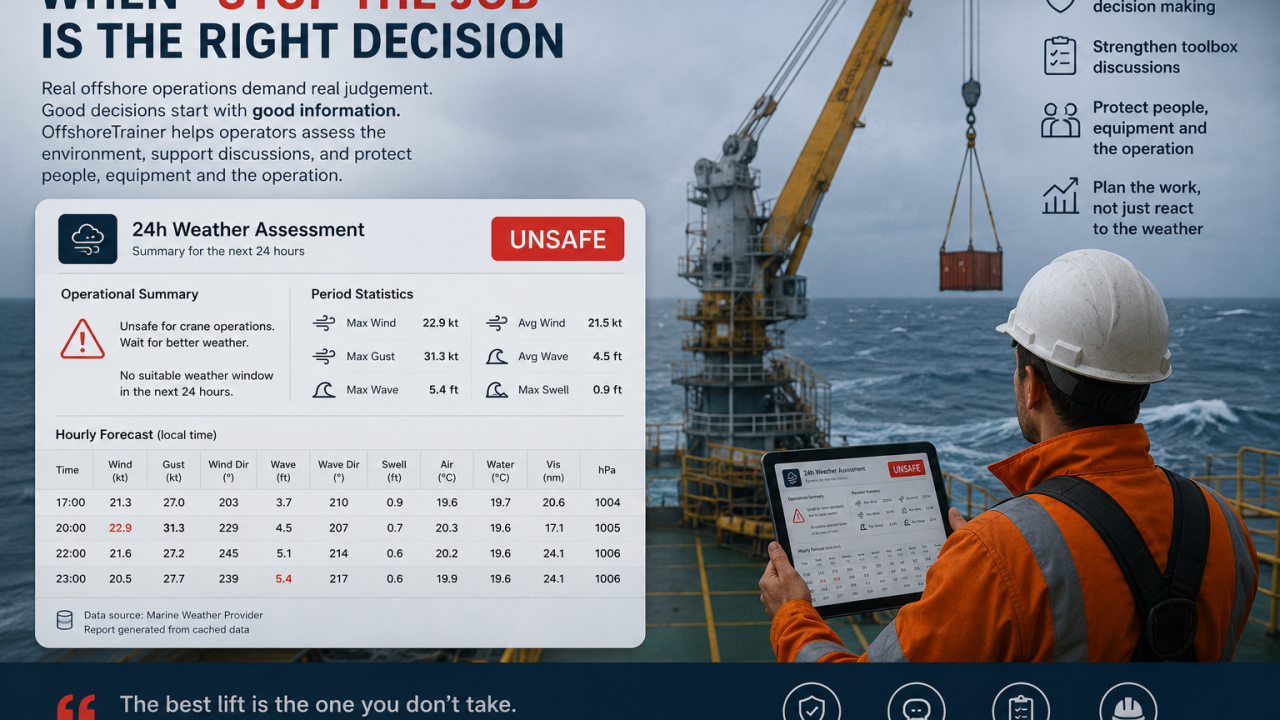
Its Safety Ring assessment processed the available marine weather data, highlighted the relevant limiting factors, and showed that the expected operating period was not suitable for crane operations.
But this is the most important part:
The application did not make the decision.
It did not replace the vessel’s systems.
It did not replace the lift plan.
It did not replace company procedures, operational limits, client requirements, the Master, or the professional judgement of the crane operator.
Instead, it gave me an additional structured reference that I could use during the toolbox discussion.
The vessel’s own operational weather information independently showed the same adverse picture.
The Master reviewed the situation and agreed with the decision not to proceed with the crane operation.
For me, this was an important moment.
Not because an application I developed was used during a real offshore operation.
But because it demonstrated where tools like this can actually create value.
For the crane operator, a good decision-support tool can help transform:
“I don’t like these conditions.”
into a much more structured professional discussion:
What are the current environmental conditions?
Which parameter is becoming limiting?
What is the expected trend?
Is there a realistic operating window ahead?
How long could the unsafe period continue?
Does the forecast support what we are physically observing?
Are the conditions moving toward or away from the operational limits?
That difference matters.
A crane operator is often the person physically closest to the consequences of a bad lifting decision.
Having fast, readable and structured information available during a toolbox discussion can make it easier to explain why a Stop Work decision is justified.
For companies, the potential value is broader.
A well-designed operational support tool can help create more consistent pre-job thinking.
It can support stronger toolbox discussions.
It can reinforce Stop Work Authority.
It can help less experienced personnel recognize developing environmental risks.
It can create a stronger connection between training and real offshore operations.
And perhaps most importantly, it can improve the quality of the conversation between the operator, vessel management and the client.
Instead of asking:
“Can we somehow get this job done?”
the better question is:
“Can we demonstrate that this job can be performed safely within the defined operational limits?”
Those are two very different questions.
Offshore operations will always involve commercial pressure, changing weather, operational demands and tight schedules.
Technology cannot remove those realities.
And technology should never replace competent people.
But technology can give competent people better tools to make and communicate competent decisions.
That is the direction in which I believe professional offshore software should develop.
Not as a replacement for vessel systems.
Not as a replacement for procedures.
Not as a replacement for experience.
But as another layer of situational awareness.
Another independent reference.
Another tool that helps somebody say:
“No. Not now. The conditions are not right.”
And explain why.
For me, this was also an important milestone in the development of OffshoreTrainer.
It was the first time the application moved beyond development, testing and simulation and became a practical reference during a real offshore operational discussion.
That is exactly where I want to take the product further.
Training should not end when the exam is passed.
The best professional training tools should remain useful when you step onto the deck and the decisions become real.
#CraneOperator
Originally published by OffshoreTrainer on LinkedIn. View on LinkedIn